


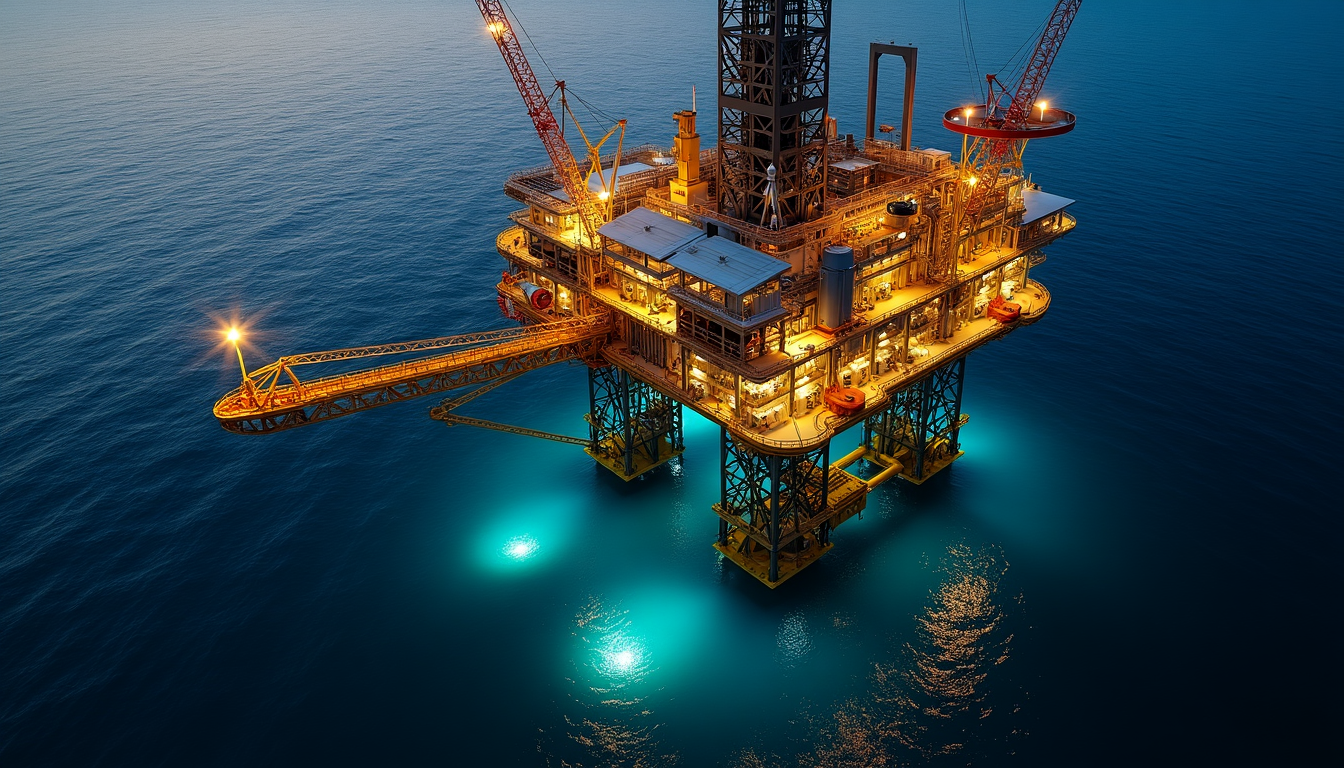
In the modern world, where energy demand continues to rise and easily accessible resources dwindle, industries are increasingly turning to the deep ocean for solutions. Deep offshore technology is at the heart of this exploration, enabling the safe and efficient extraction of resources and deployment of infrastructure in some of the most extreme environments on Earth. From oil and gas to renewable energy and subsea telecommunications, deep offshore technology is a cornerstone of global innovation.
What Is Deep Offshore Technology?
Deep offshore technology refers to the specialized tools, systems, and processes used to operate in deepwater and ultra-deepwater environments. Typically, water depths of 500 meters (1,640 feet) and beyond are considered “deepwater,” while “ultra-deepwater” exceeds 1,500 meters (4,920 feet). Operations at such depths face unique challenges, including extreme water pressure, low temperatures, strong currents, and complete darkness. Human intervention is limited, making advanced engineering, robotics, and automation essential for successful operations.
The scope of deep offshore technology extends beyond traditional oil and gas production. It includes subsea infrastructure, offshore wind farms, underwater communication networks, and even scientific exploration. Every operation relies on a combination of hardware, software, and highly trained personnel working together to ensure efficiency, safety, and environmental responsibility.
Core Components of Deep Offshore Technology
Successful deep offshore operations depend on a mix of mechanical, digital, and robotic systems designed for the harshest conditions.
1. Subsea Production Systems
These systems include subsea trees, manifolds, and pipelines installed directly on the seabed. They control the flow of hydrocarbons from underwater wells to floating production units or shore-based facilities. Subsea systems must withstand high pressures, strong currents, and corrosive seawater, making durability a key design consideration.
2. Floating Production Units
In deep and ultra-deep waters, traditional fixed platforms are often impractical. Floating units such as FPSOs (Floating Production, Storage, and Offloading units), semi-submersibles, and tension-leg platforms allow oil and gas production in areas where constructing permanent structures is not feasible. These platforms can store, process, and transfer hydrocarbons, while being stable in rough seas.
3. Remotely Operated Vehicles (ROVs)
ROVs are robotic systems controlled from the surface. Equipped with cameras, manipulators, and sensors, they perform critical tasks like inspecting equipment, making repairs, and assisting in installation. ROVs are essential because human divers cannot safely reach ultra-deepwater locations.
4. Autonomous Underwater Vehicles (AUVs)
AUVs operate independently according to pre-programmed instructions. They are commonly used for seabed mapping, surveys, and environmental monitoring. With sophisticated navigation and sensor systems, AUVs collect data that is critical for safe operations and long-term planning.
5. Advanced Drilling Technology
Drilling in deepwater requires specialized techniques like directional drilling, managed pressure drilling, and real-time monitoring. These methods allow operators to reach complex reservoirs safely and efficiently while minimizing risks associated with high-pressure environments.
Why Deep Offshore Technology Matters
Deep offshore technology is vital for global energy, economic growth, and technological innovation.
Energy Security
Deepwater oil and gas fields are a significant part of the global energy supply. They help meet increasing energy demand while reducing dependence on onshore reserves, which are often limited or politically sensitive.
Economic Impact
Deep offshore projects create thousands of jobs and drive investment in engineering, technology, and logistics. They also support local economies and international supply chains, contributing to broader economic development.
Technological Innovation
Many advancements in robotics, sensors, and AI have originated from offshore projects. Innovations initially developed for deepwater environments often find applications in other industries, from marine research to defense and telecommunications.
Subsea Connectivity
Deep offshore technology supports the installation and maintenance of subsea fiber-optic cables that carry the majority of the world’s internet traffic. These networks are critical for global communication, trade, and digital infrastructure.
Challenges in Deep Offshore Operations
Operating in extreme underwater environments presents significant challenges.
Harsh Environmental Conditions
High pressure, low temperatures, and strong currents can compromise equipment if not designed to withstand these conditions.
High Costs
Deepwater projects are capital-intensive. Specialized vessels, equipment, and skilled personnel drive up costs, making precise planning and risk management crucial.
Safety Risks
Failures at great depths are difficult to fix quickly. Relying on automation, remote monitoring, and safety systems reduces risk, but challenges remain.
Environmental Concerns
Accidental leaks or spills in deepwater environments are harder to contain and can have severe environmental impacts. Regulations and technological safeguards are critical to minimizing these risks.
Digital Transformation in Deep Offshore Technology
Modern deep offshore operations increasingly rely on digital technologies to improve safety, efficiency, and cost-effectiveness.
Artificial Intelligence and Data Analytics
AI algorithms process massive amounts of operational data to predict equipment failures, optimize drilling paths, and reduce downtime. Predictive maintenance ensures smoother and safer operations.
Digital Twins
Digital twins are virtual replicas of offshore assets. Engineers use them to simulate scenarios, test interventions, and predict potential problems before they occur in the real world.
Remote Monitoring and Operations
Advanced connectivity enables real-time monitoring and remote control of offshore assets. Many operations can now be managed from onshore facilities, reducing the need for large crews offshore and minimizing human risk.
The Future of Deep Offshore Technology
The future of deep offshore technology is closely tied to sustainability, automation, and efficiency. While oil and gas will continue to play a role, offshore expertise is increasingly applied to renewable energy, such as floating wind farms, wave energy, and subsea carbon capture. Robotics and autonomous systems will continue to evolve, reducing human exposure to hazardous conditions while improving operational efficiency. Smart systems, powered by AI and data analytics, will further reduce costs and environmental impact.
Deep offshore technology is not just about extracting resources—it is about safely and responsibly operating in one of the planet’s most extreme environments while laying the groundwork for sustainable energy solutions and global connectivity.
Frequently Asked Questions (FAQs)
What depth qualifies as deep offshore?
Deep offshore typically starts at 500 meters of water depth, while ultra-deepwater exceeds 1,500 meters.
Is deep offshore technology only for oil and gas?
No. It is also used for subsea cables, renewable energy projects, and marine research.
How do engineers operate equipment underwater?
Most operations rely on ROVs, AUVs, and automated systems controlled remotely from surface vessels or onshore facilities.
Why is deep offshore drilling so costly?
High costs stem from specialized vessels, equipment, skilled labor, and challenging environmental conditions.
How safe is deep offshore technology for the environment?
Modern systems include safety and monitoring measures, but risks remain. Regulatory compliance and technological safeguards help reduce environmental impact.
What role does AI play in offshore operations?
AI predicts failures, optimizes production, supports maintenance, and improves overall safety.
Will deep offshore technology remain important in the future?
Yes. It will continue to be essential for energy supply, subsea infrastructure, and emerging offshore industries.
Deep offshore technology represents the frontier of human innovation. By combining engineering expertise, robotics, and digital intelligence, it allows humanity to explore, produce, and innovate safely in one of the most challenging environments on Earth. As the world transitions to more sustainable energy sources, deep offshore technology will remain a critical tool for ensuring energy security, technological progress, and global connectivity.